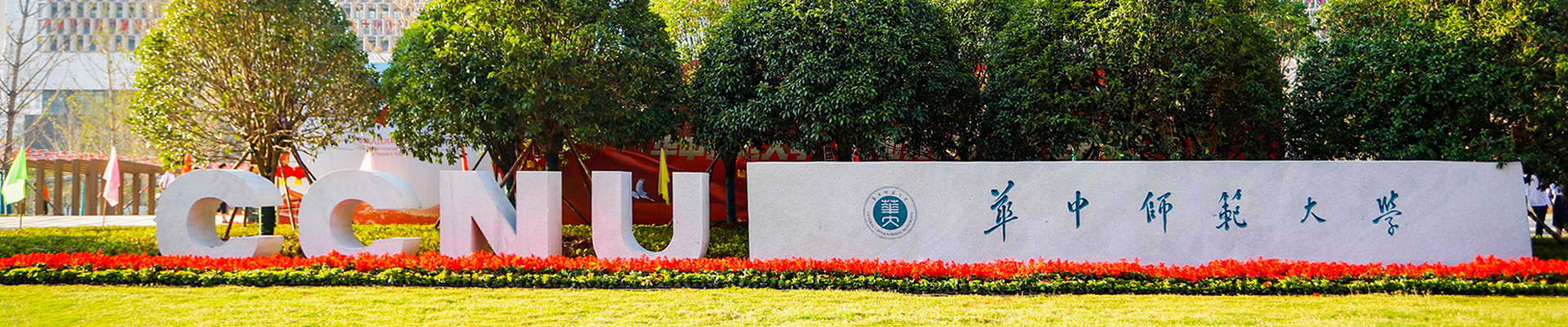
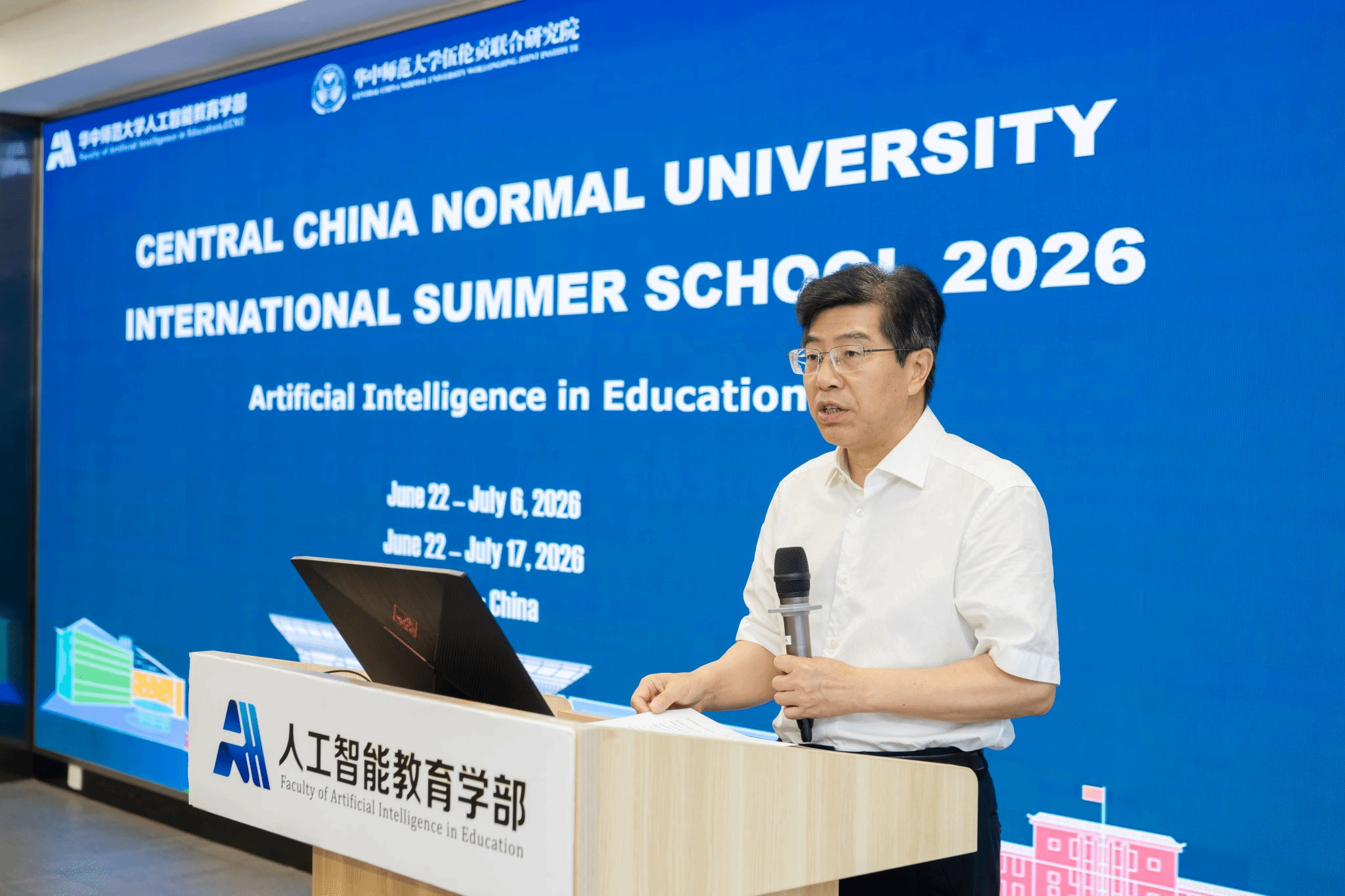
From June 22 to July 6, the 2026 International Summer School on Artificial Intelligence in Education was successfully held at Central China Normal University (CCNU). A total of 38 international students from partner universities overseas—including the University of Wollongong, Swinburne University of Technology, and La Trobe University in Australia; the University of Newcastle and the University of Glasgow in the UK; Herzen State Pedagogical University of Russia and Moscow City University in Russia; Nanyang Technological University in Singapore; the University of British Columbia in Canada; and Nile University in Egypt—participated in the two-weeks' program of academic exchange and cultural immersion. President Shuangjie Peng delivered a speech at the opening ceremony, which was also attended by officials from the Department of International Cooperation and the Faculty of Artificial Intelligence in Education, as well as faculty leaders from the partner universities.
In his opening address, President Peng noted that as generative AI evolves from an auxiliary tool into a key force reshaping knowledge production, the future of education is accelerating toward large-scale, personalized "human-machine collaboration." He emphasized that CCNU is committed to building a new educational paradigm featuring three-way collaboration among "teachers, students, and machines." Focusing on the core theme of AI in education, this year's International Summer School explored cutting-edge areas such as intelligent tutoring systems and educational large language models through cross-cultural exchange and research collaboration, aiming to empower global youth to jointly explore new pathways for AI to reshape education.
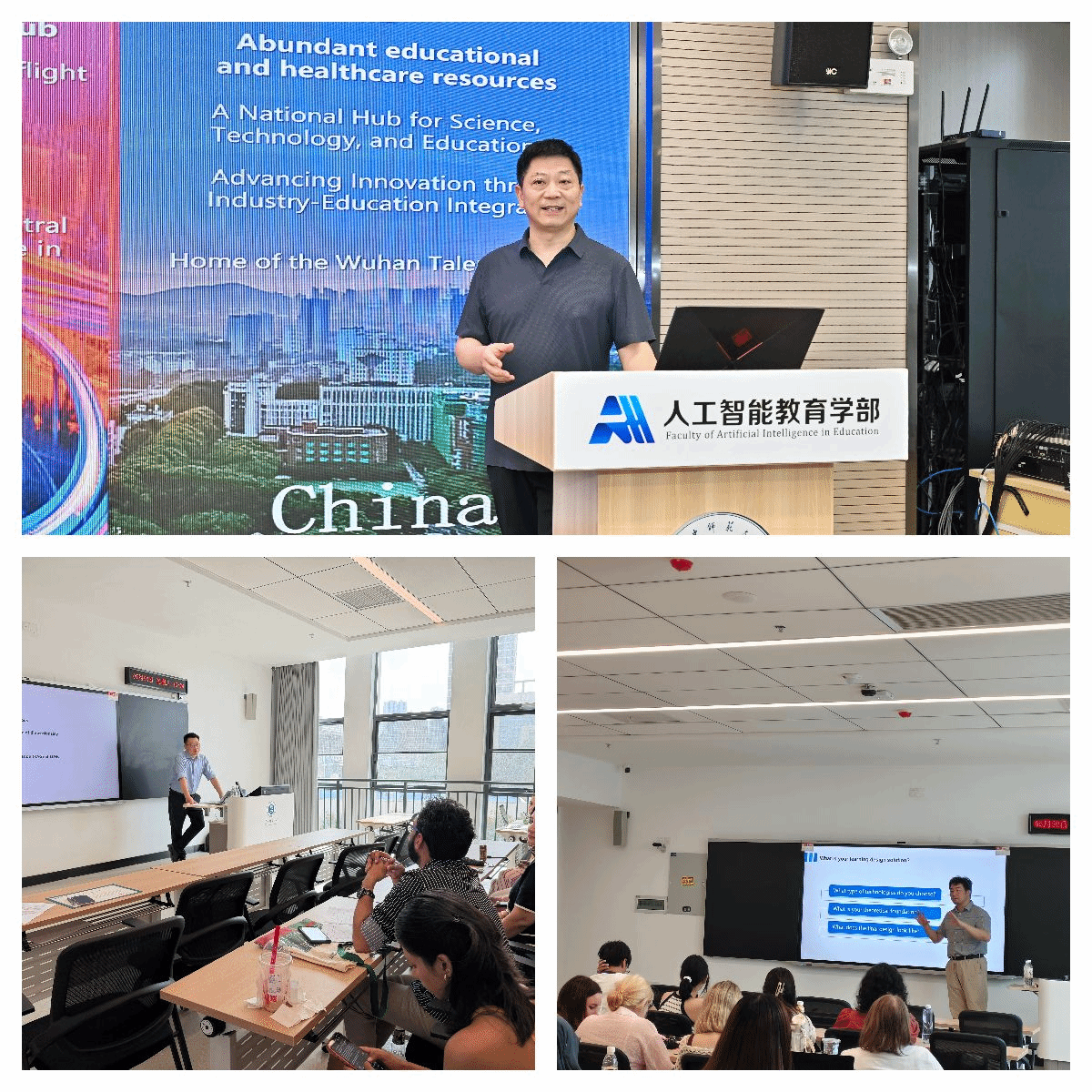
The summer school featured keynote lectures delivered by distinguished scholars, including Professor Hao Wang from Wuhan University, and CCNU Professors Xu Du and Heng Luo. Based on their academic backgrounds, participants were divided into nine project groups. Under the guidance of CCNU’s young faculty members, they engaged in in-depth discussions on frontier topics in intelligent education.
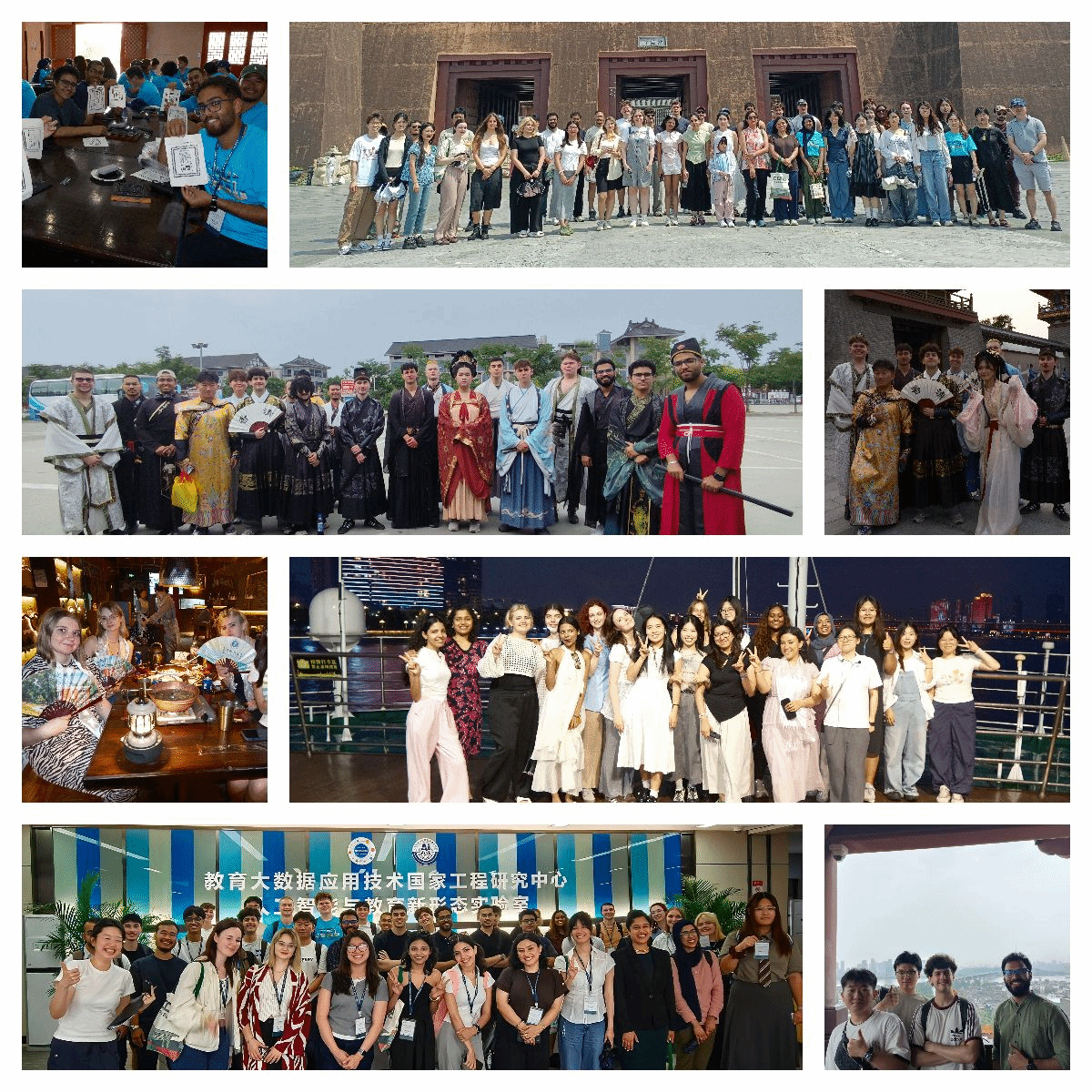
During the cultural practice sessions, participants traveled to Xiangyang and Zaoyang for an immersive cultural study tour focused on the historical context of the Han and Tang dynasties. At the Tang City in Xiangyang, students wore traditional Hanfu and visited iconic landmarks such as the Zhuque Corridor, Mingde Gate, and Hualou Pavilion. Through shooting traditional-style videos and engaging in cross-cultural sharing, they experienced firsthand the architectural aesthetics of the prosperous Tang Dynasty and the etiquette embedded in traditional clothing culture. At the Han Cultural Experience Base in Zaoyang, students participated in intangible cultural heritage workshops, including movable type printing, traditional paper-cutting, and making herbal sachets. These hands-on activities deepened their understanding and appreciation of excellent traditional Chinese culture. By combining on-site study tours with intangible heritage experiences, the program vividly showcased the unique charm of Chinese culture to young international participants.
During their stay, participants also took courses in Chinese language and culture, and, under expert guidance, practiced Tai Chi and learned to make and perform shadow puppetry, gaining comprehensive exposure to traditional arts. Off campus, they visited the Yellow Crane Tower and the Yekaitai Museum of Traditional Chinese Medicine Culture, deepening their appreciation of Jingchu culture and traditional Chinese medicine.
Student representatives from various countries shared theirexperiences. Benyameen Hashmi, an undergraduate student majoring in Computer Science at Newcastle University, said, "This summer school has allowed me to personally appreciate the depth of historical heritage and modern vitality of Wuhan. The unique charm of Chinese culture has far exceeded my expectations." Youssef Mohamed Ezzeldeen Mohamed, an undergraduate student majoring in Artificial Intelligence at Nile University, remarked, "This summer school not only provided me with practical experience in AI projects, but also allowed me to deeply appreciate the profoundness of Chinese history and the warm hospitality of the Chinese people during our cultural trips to the Yellow Crane Tower and Xiangyang. These cross-border friendships and wonderful memories will stay with me for a lifetime." Sofia Kozhemiakina, a graduate student majoring in Pedagogy at Moscow City University, shared, "This summer school not only gave me an in-depth understanding of the application of AI in education, but also allowed me to truly feel the charm of Chinese culture and the power of AI as a global connector through cultural experiences such as Tai Chi and Mandarin classes, as well as interactions with students from around the world." Shazia Ali, a graduate student majoring in Administration at Swinburne University of Technology in Australia, excitedly shared, "I have gained so much from this summer school, and I would like to express my heartfelt gratitude to the teachers and volunteers at CCNU for their care and support. Although it is hard to say goodbye, this fulfilling experience will undoubtedly become my most precious memory."
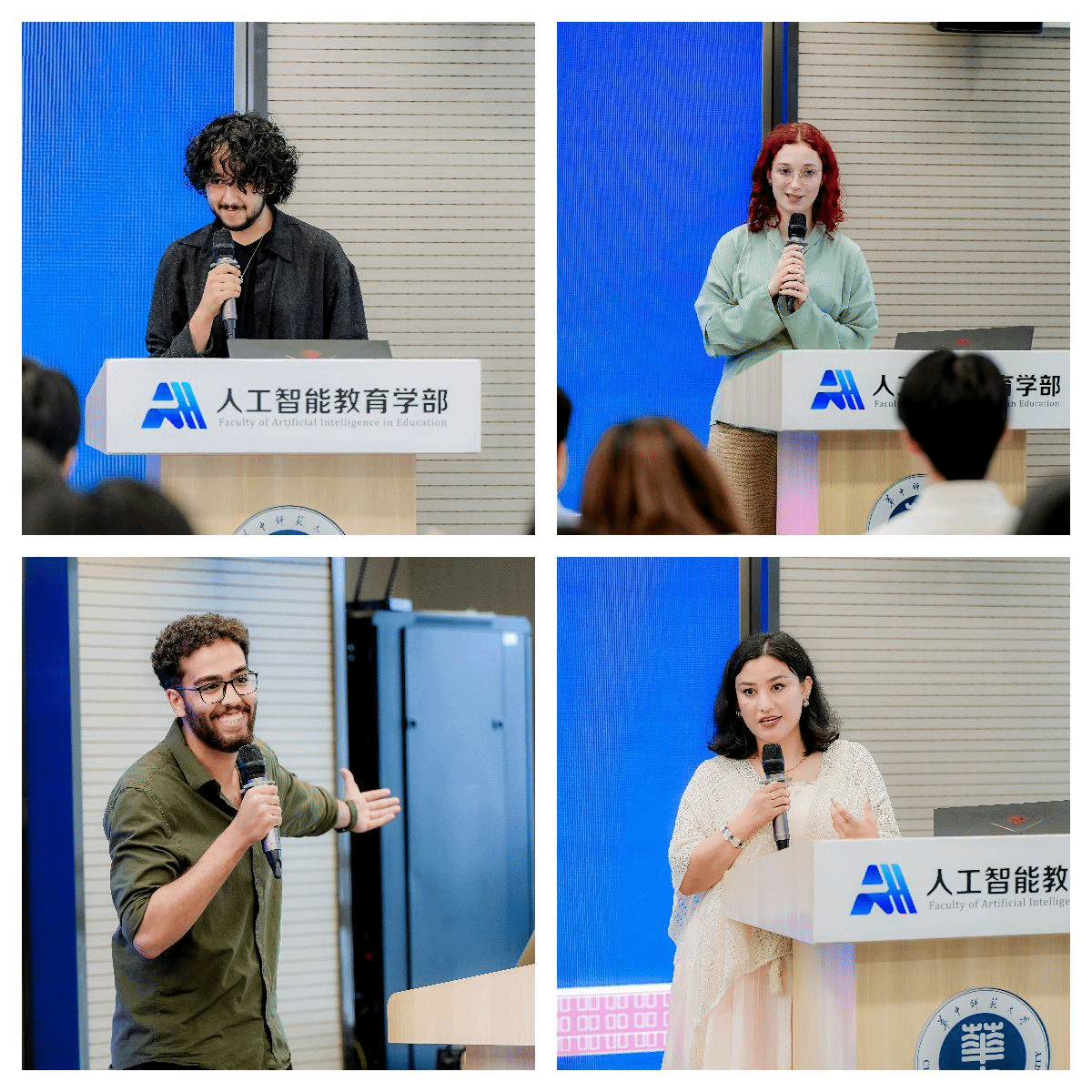
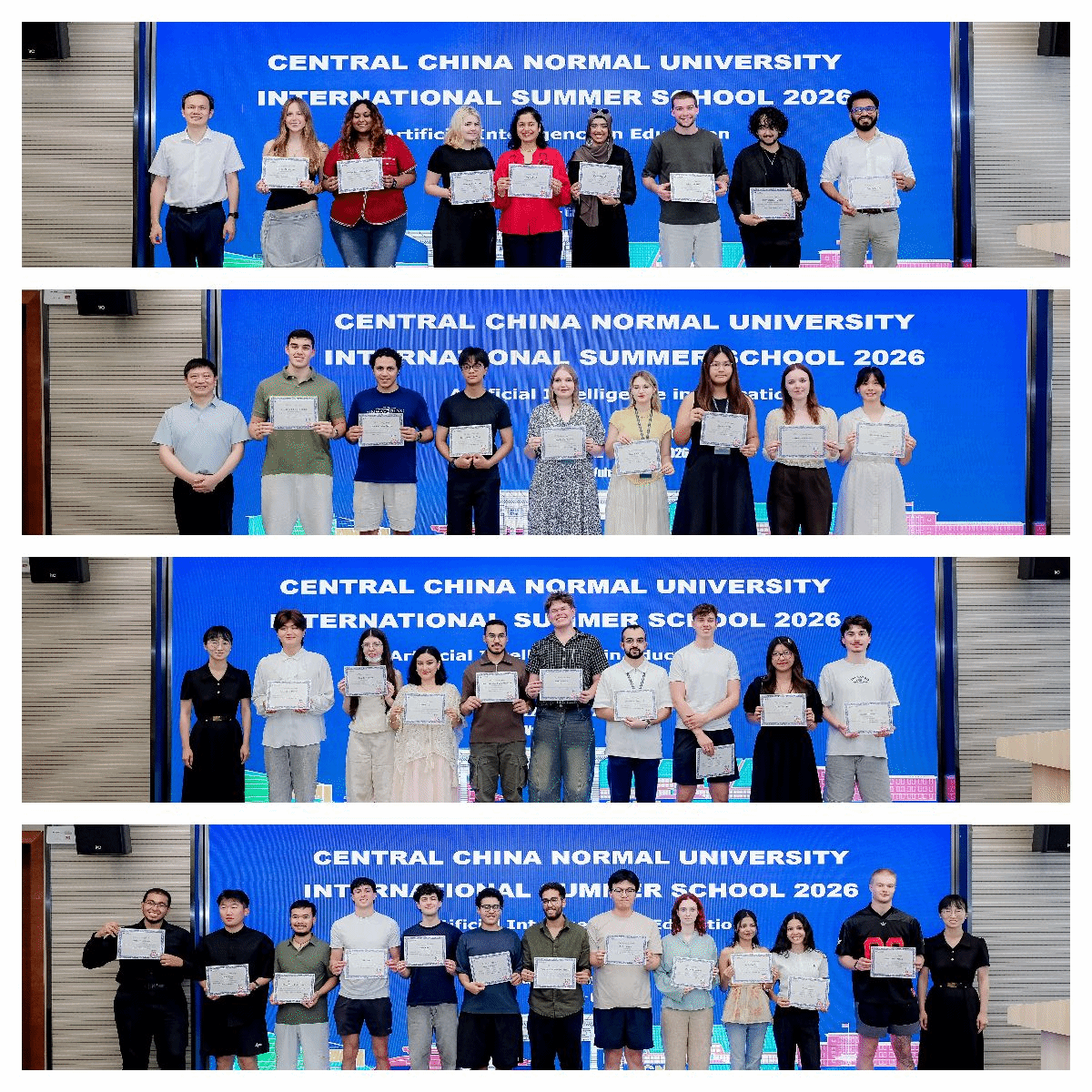
On July 5, the students successfully completed their group project presentations and were awarded certificates of completion, bringing this year's summer school to a perfect conclusion.
It is reported that this is the eighth International Summer School on AI in Education hosted by CCNU, which has attracted over 200 participants from around the world to date, with its partnership network covering Oceania, Europe, Africa, and Southeast Asia. For the first time, this year's program integrated a two-week session (June 22 to July 6) with a four-week session (June 22 to July 17). Students from our partner institution, the University of Wollongong, continued their four-week immersive learning on campus and completed a full academic program. This initiative not only extended the duration of the program but also promoted innovation and deep integration of teaching models, marking a solid step forward in CCNU's international cooperative education endeavors.